How to Run Leagues and Tournaments Without Spreadsheets
How to manage scoring, standings, brackets, player records, and bookings in one league workflow.
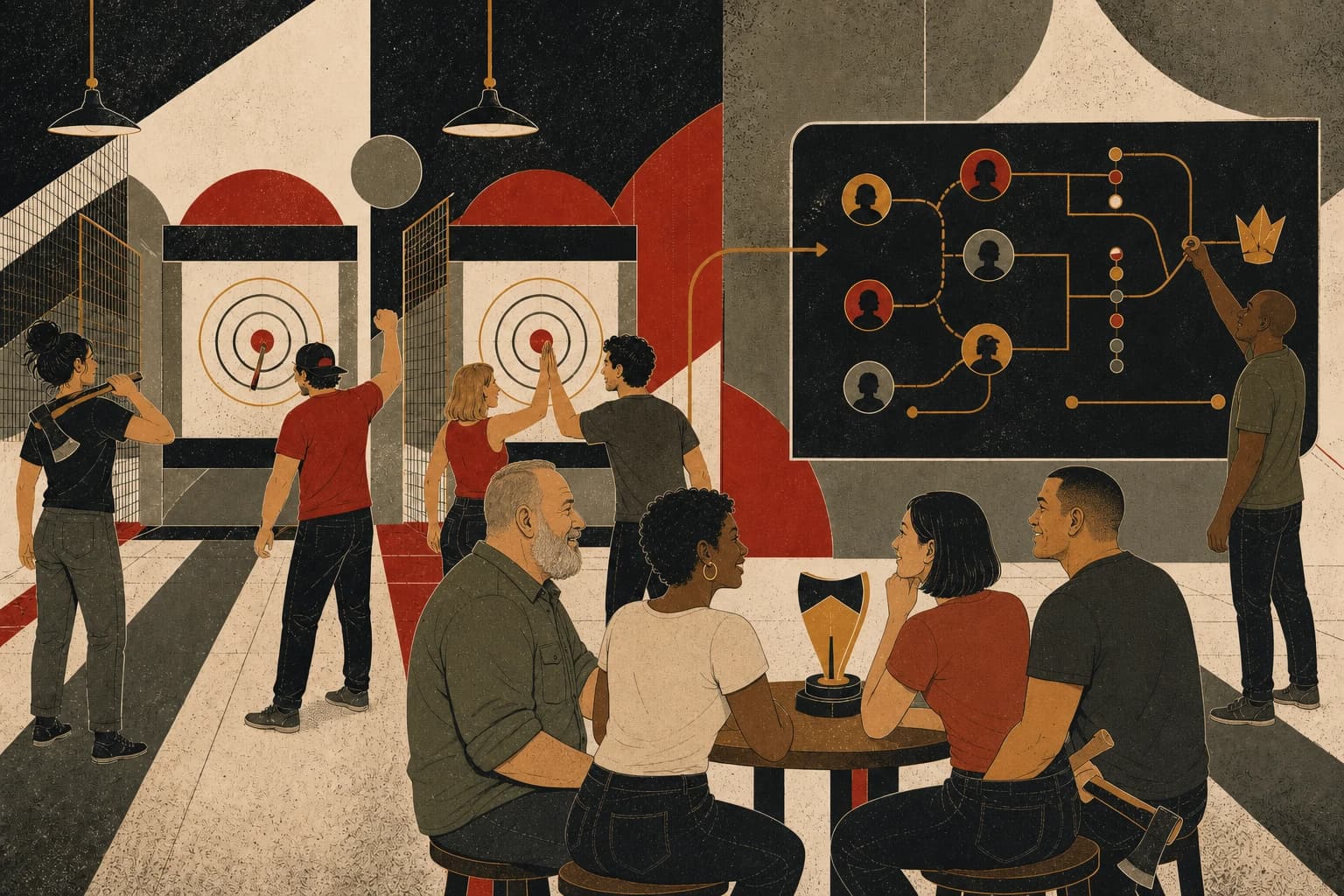
Blade resources / FIELD
How to Run Leagues and Tournaments Without Spreadsheets
Why this matters
A practical guide for owners comparing booking, front-desk, lane, league, customer, and reporting workflows.
Quick takeaways
League nights create repeat traffic only when admin work stays manageable.
Scoring data becomes more valuable when it feeds standings, profiles, and follow-up.
Bracket logic should not live outside the venue system.
01
Manual league administration grows quickly
A lot of venues start leagues in a spreadsheet because it feels flexible. Then standings, attendance, late changes, and bracket logic begin to pull staff time away from running the room.
The workload grows when scoring, schedules, standings, and player records live in different places.
02
Use one scoring record across the competition
When digital scoring is tied to the player and venue record, it can support player history, achievements, leaderboards, standings, and membership activity.
Keeping the scorecard in the same system as the booking removes the need to reconcile results with a separate customer record.
03
Review competitive activity with the rest of the venue
The venue should be able to review league attendance, tournament activity, player history, memberships, and related booking activity together.
That requires competition records and standard bookings to live in the same venue system.
More guides for axe throwing operators.
Each article focuses on a specific buying or operating decision: booking, lane use, check-in, scoring, leagues, or reporting.
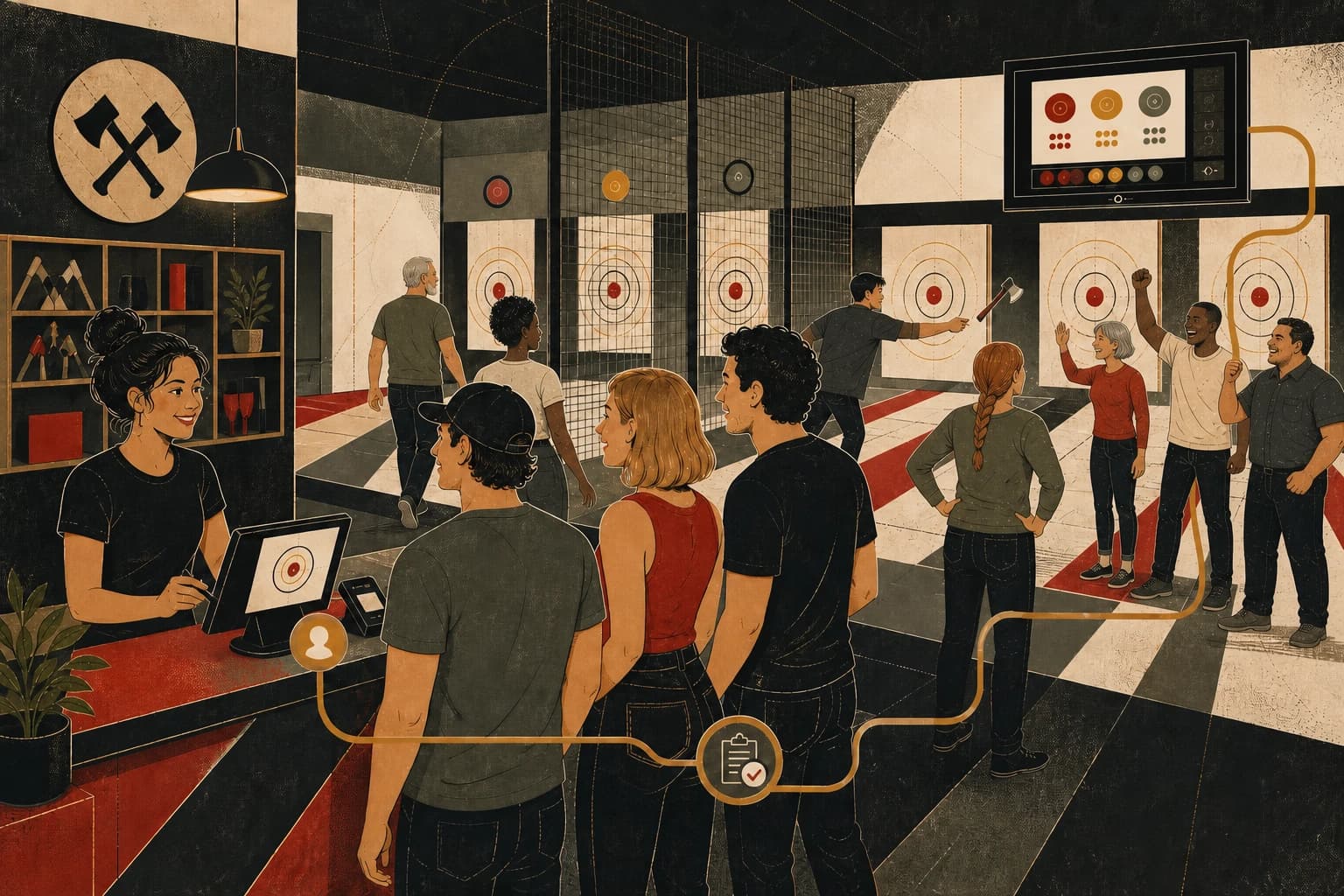
Blade resources / 01
How to Choose Axe Throwing Booking Software
What owners should compare before they swap booking tools for their axe throwing venue.
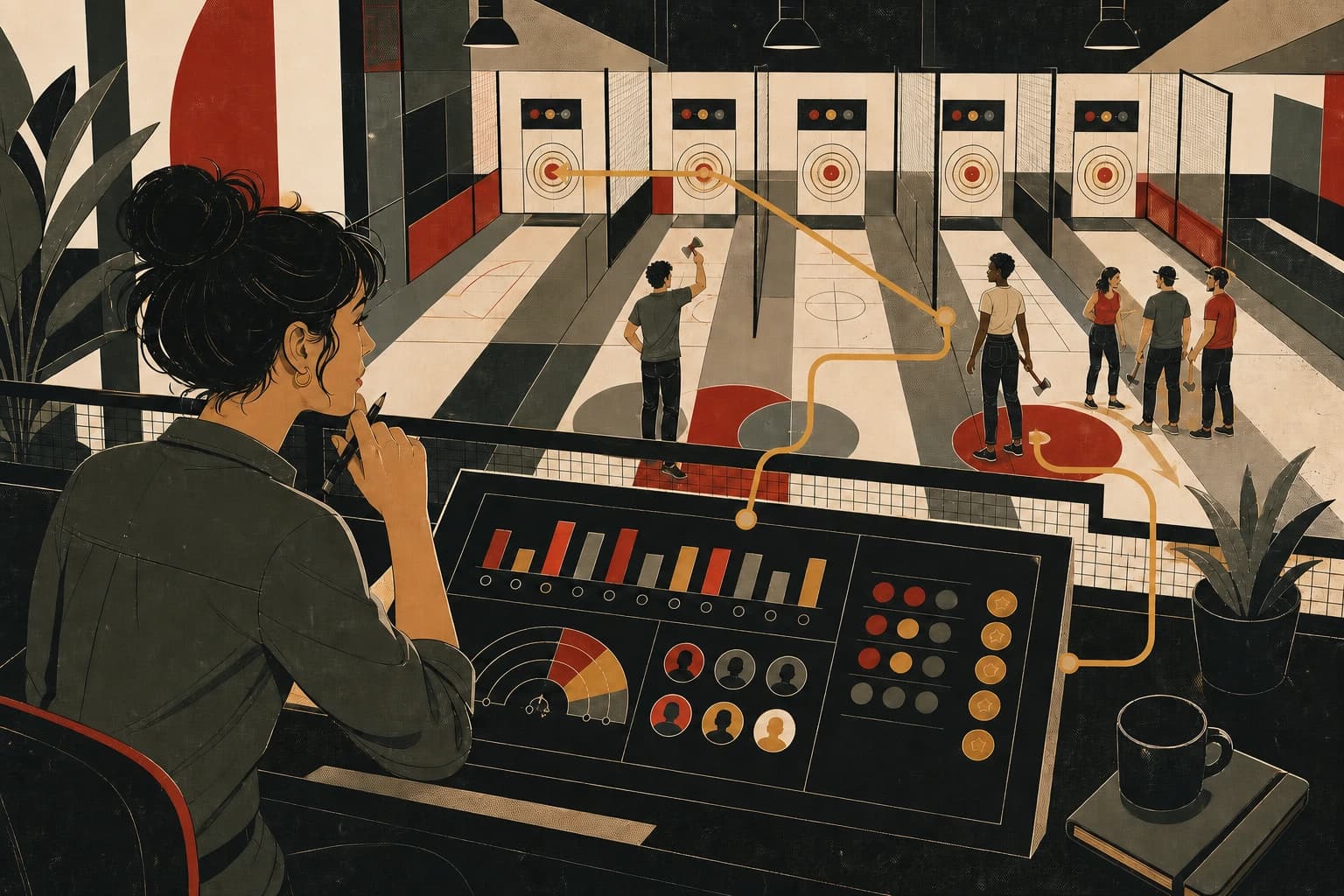
Blade resources / 02
How to Fill Empty Lanes Without Discounting Everything
A practical look at happy hour, plan-and-save, dynamic pricing, and waitlist strategy for axe houses.
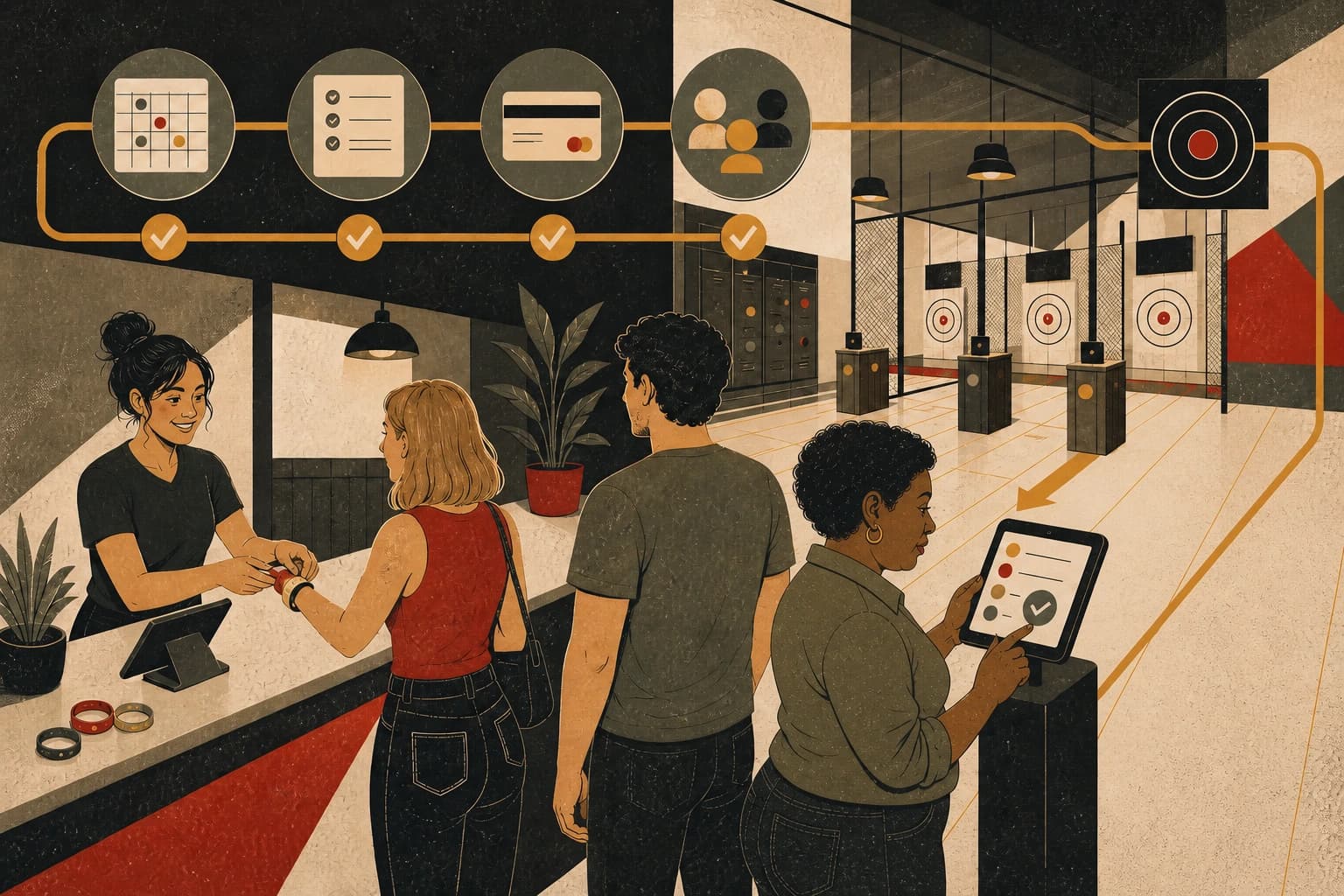
Blade resources / 03
How to Speed Up Waivers and Check-In at the Desk
How venues can cut lobby friction before a busy shift turns into a queue problem.
Blade resources / 04
What to Watch in an Axe Throwing Dashboard
The views owners can use when reviewing lanes, staffing, pricing, leagues, and customer activity.
See how Blade handles this across the venue.
Compare your current process with Blade’s connected workflow for booking, scoring, check-in, customer records, and reporting.